
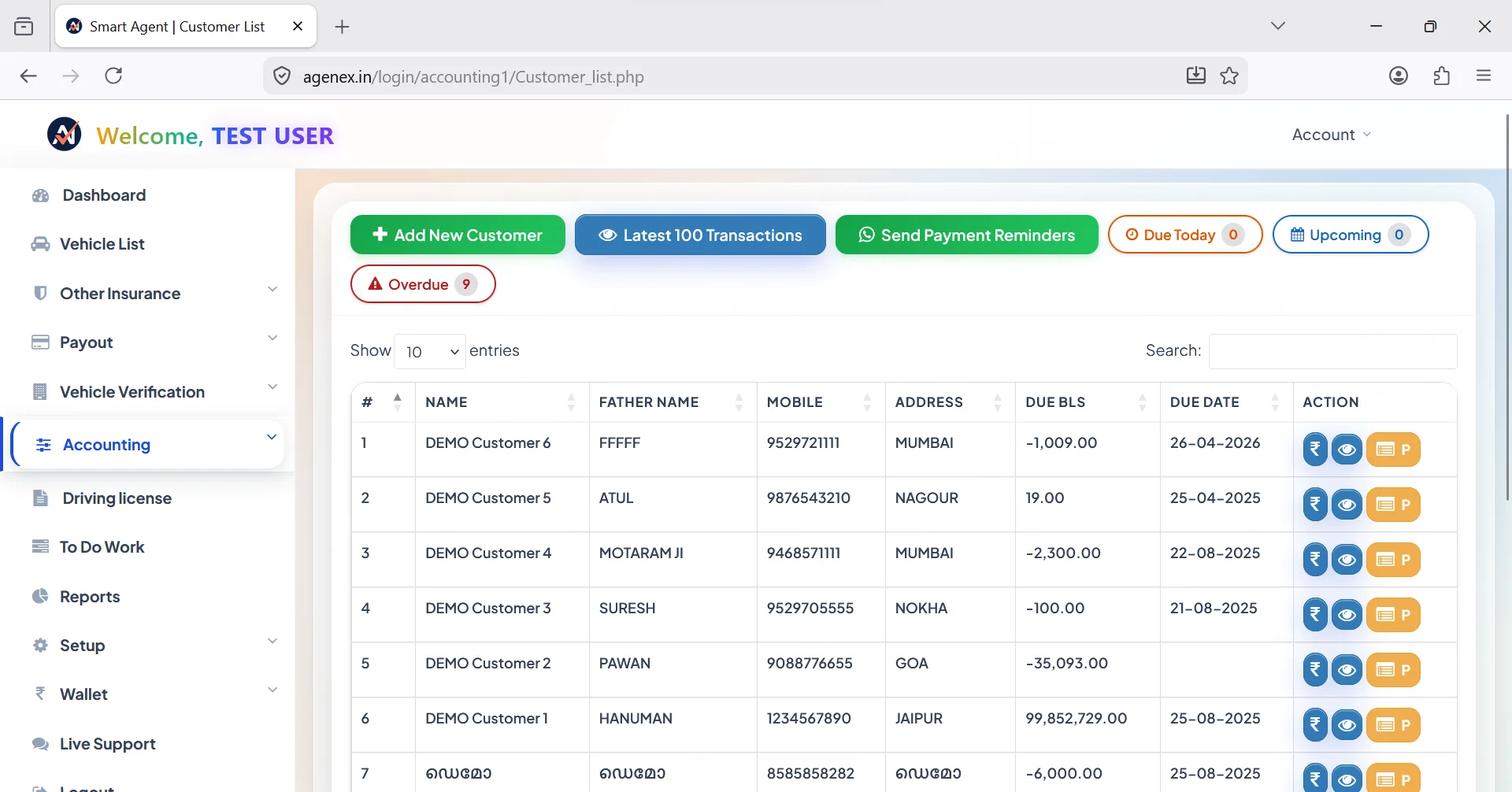
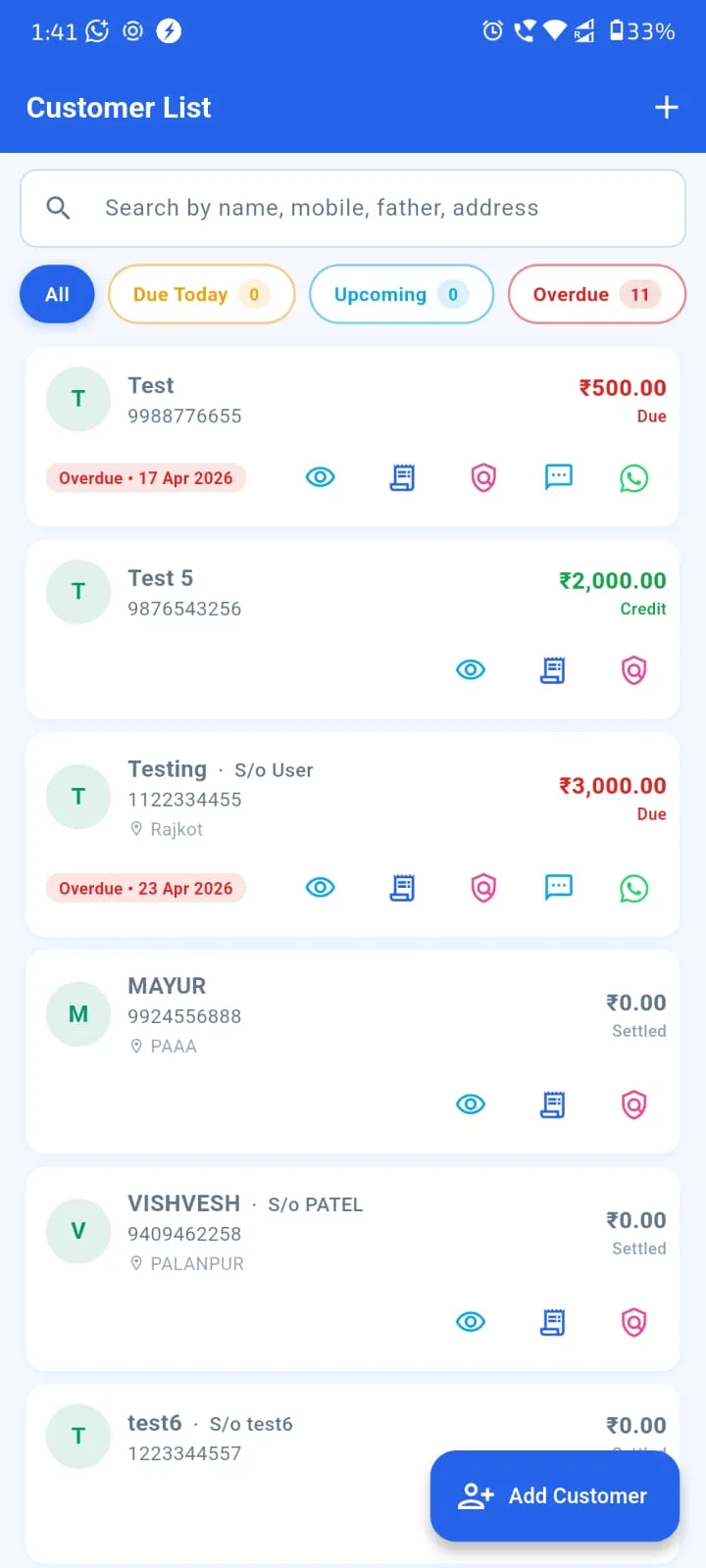
Every Indian insurance agent eventually hits the same ceiling. The first 50-100 clients fit on a single Excel sheet or a paper diary. By 300 clients, that system starts leaking - policies forgotten, renewals missed, KYC documents in three different folders, no idea who paid premium last month and who did not. The agents who break through that ceiling are not the ones who work harder at Excel. They switch to an insurance client management software that was actually built for how insurance works in India.
This guide is a practical walkthrough of what that software does, what problem it solves, and how to know if it is the right next move for your book. Related reading: Insurance Client Database System, Insurance Agent CRM India and 360 Customer View Platform.
What Insurance Client Management Software Actually Does
A real insurance CRM is not a generic Salesforce-style contact list. It is built around the specific objects an agent deals with every day - a client, the multiple policies that client owns across different insurers, the documents that prove it, the premium payments that keep it alive, and the renewal dates that determine your commission.
- Unified client profile: One record per person, with every motor, health, life and general policy attached.
- Policy history: Issue date, expiry date, premium, sum insured, insurer, commission, claim history - all visible at a glance.
- KYC vault: Aadhar, PAN, photo, RC, policy PDF - encrypted, searchable, retrievable in seconds.
- Communication log: Every call, every WhatsApp, every email - timestamped against the client.
- Renewal timeline: What is due in 7, 15, 30 days - one filter, one click.
- Family linking: Spouse, children, parents under a single household - the foundation for cross-sell.
Each of these on its own sounds small. Stacked together, they replace 4-5 different tools an agent typically runs - the Excel sheet, the paper register, the WhatsApp folder, the Google Drive of scanned documents, and the mental "to-do list" of follow-ups. That consolidation is the whole point.
The Workflow It Replaces
Picture a typical Tuesday morning for an agent without a CRM. The Excel sheet opens on the laptop. A separate folder of scanned policy PDFs sits on the desktop. The phone has a WhatsApp group of client messages. The paper diary tracks renewals on hand-written pages. A spreadsheet at the back tracks commissions, badly. When a client calls and asks "what was my health insurance sum insured last year?" the agent puts them on hold for 4 minutes hunting across three places.
With a proper policy manage karne wala software, that same call resolves in 10 seconds. Search by phone, the unified profile opens, scroll to the health section, the previous year's sum insured is right there. Multiply that by the 30-40 client touchpoints an agent has in a working day and you are looking at 90+ minutes of recovered time - every single day. That recovered time becomes either more selling or a saner work-life balance. Both compound.
Features That Matter For Indian Agents Specifically
A few features separate an insurance-specific CRM from a generic one. These are the ones to ask about before you commit to any tool:
- Multi-insurer support: One agent typically deals with 5-10 insurers. The CRM should treat them all as first-class - not bolt one on as the "primary" and others as exceptions.
- WhatsApp-first reminders: Indian clients respond on WhatsApp. SMS works but is secondary. Email is a distant third. The reminder engine should reflect that.
- Local language support: Hindi, Tamil, Telugu, Marathi, Bengali, Gujarati, Kannada, Punjabi, Malayalam - templates should be available in at least 10 Indian languages.
- RC/Vahan integration: For motor policies, instant RC lookup from the government Vahan database saves 5 minutes per quote.
- Commission tracking by insurer + product: Different rates for Bajaj motor vs Star health vs HDFC term - all calculated automatically when a policy is added.
- Sub-agent / staff access: Role-based permissions so a telecaller can see leads but not commission, and an admin can see everything.
- Mobile + web: The agent works from the road. The mobile app must be feature-complete, not a stripped-down companion.
Try Agenex Free
Every feature unlocked on a free trial — no credit card. Multi-insurer, multi-language, mobile + web - the all in one insurance agent app built for Indian client management.
Start Free TrialWhere The ROI Shows Up - And When
Most agents see payback in the first 30-45 days, but the categories of return are worth knowing in advance because they show up in different places.
- Renewal recovery: The single biggest dollar-value win. Agents typically lose 8-15% of renewals to forgetting or late reminders. Automated WhatsApp reminders at 30/15/7/1 days recover most of that. On a book of 500 policies at avg premium ₹12,000, that recovered renewal commission alone is ₹30,000-50,000 a year.
- Cross-sell visibility: "This client has motor, no health" is a question the CRM answers instantly. Without it, that opportunity is invisible. 2-3 cross-sell policies a month = serious additional commission.
- Time recovered: 90+ minutes a day on lookups, search, and follow-up tracking. Even at a conservative ₹500/hour valuation, that is ₹15,000-20,000 of recovered time per month.
- Compliance + audit: KYC stored properly, audit trail on every change. When IRDAI or the insurer asks, the answer is ready.
The sum is conservative even at small-agent scale: a CRM that costs a few thousand a year typically returns 20-50x that in the first year. For a deeper view of how this connects to other parts of the agent's stack, see Insurance Policy Management Software and Insurance Renewal Reminder Software.
FAQ
A CRM purpose-built for insurance agents - one record per client, every policy they own across insurers, KYC documents, communication history, and renewal timelines, all in one searchable place.
Insurance-specific data model. A generic CRM has "contact" and "deal" - useful for B2B sales. An insurance CRM has "client", "policy", "premium", "sum insured", "NCB", "IDV", "renewal date", "claim" - all the fields you actually use daily. Generic CRMs need heavy customization to come close.
Yes - role-based access. A telecaller can see leads and call lists but not commission. A sub-agent can see only their own clients. An admin sees everything. Every action is logged with an audit trail.
Yes - full Excel / CSV export of clients, policies, documents and communication history at any time. Your data belongs to you. This is a non-negotiable trust principle for any serious insurance agency management software.
1-2 seconds across any field - phone, name, RC, policy number, city. Filter combinations like "Indore motor policies expiring November, no health insurance" return results instantly. This is what separates a real database from an Excel sheet at scale.