
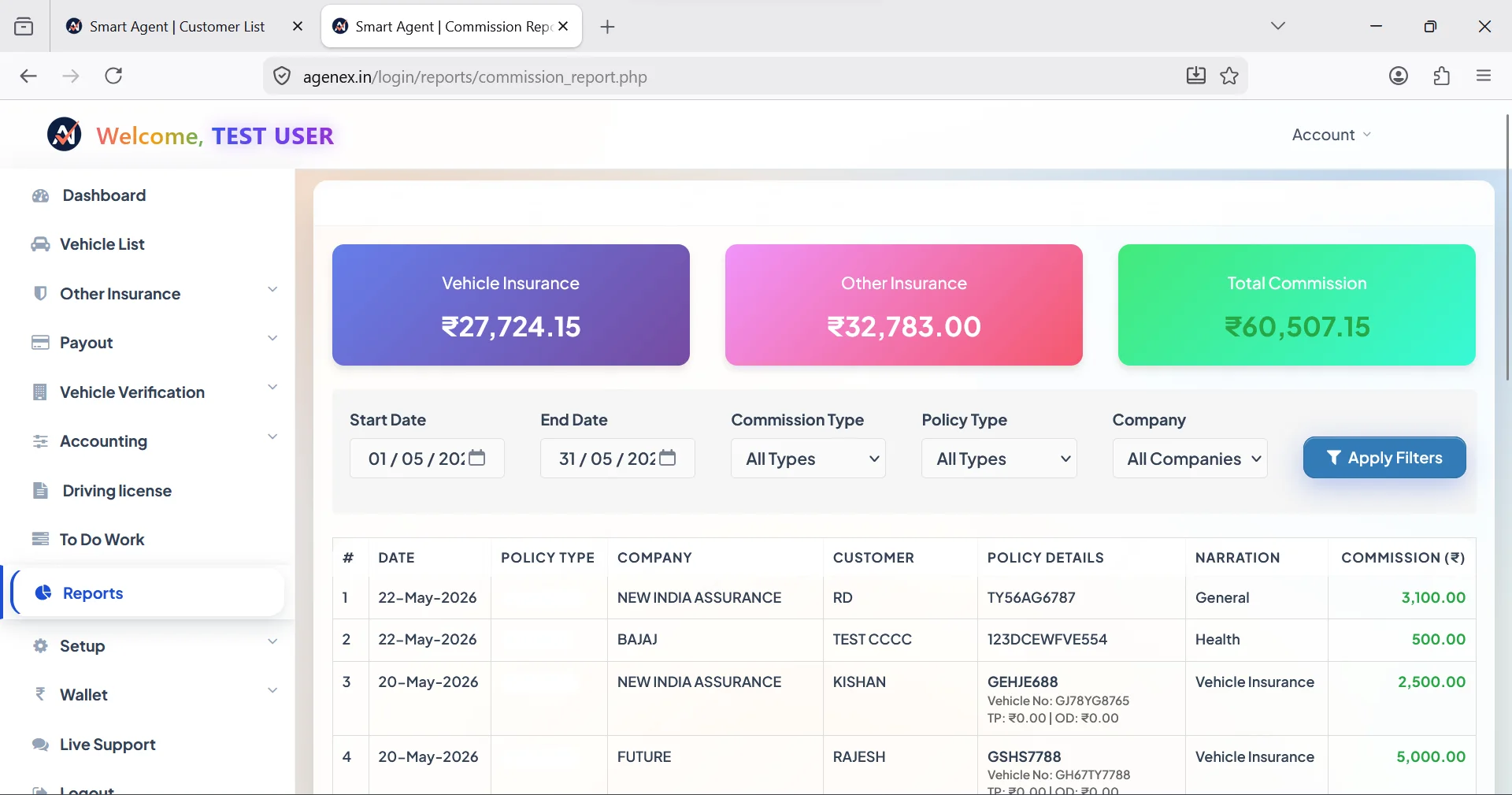
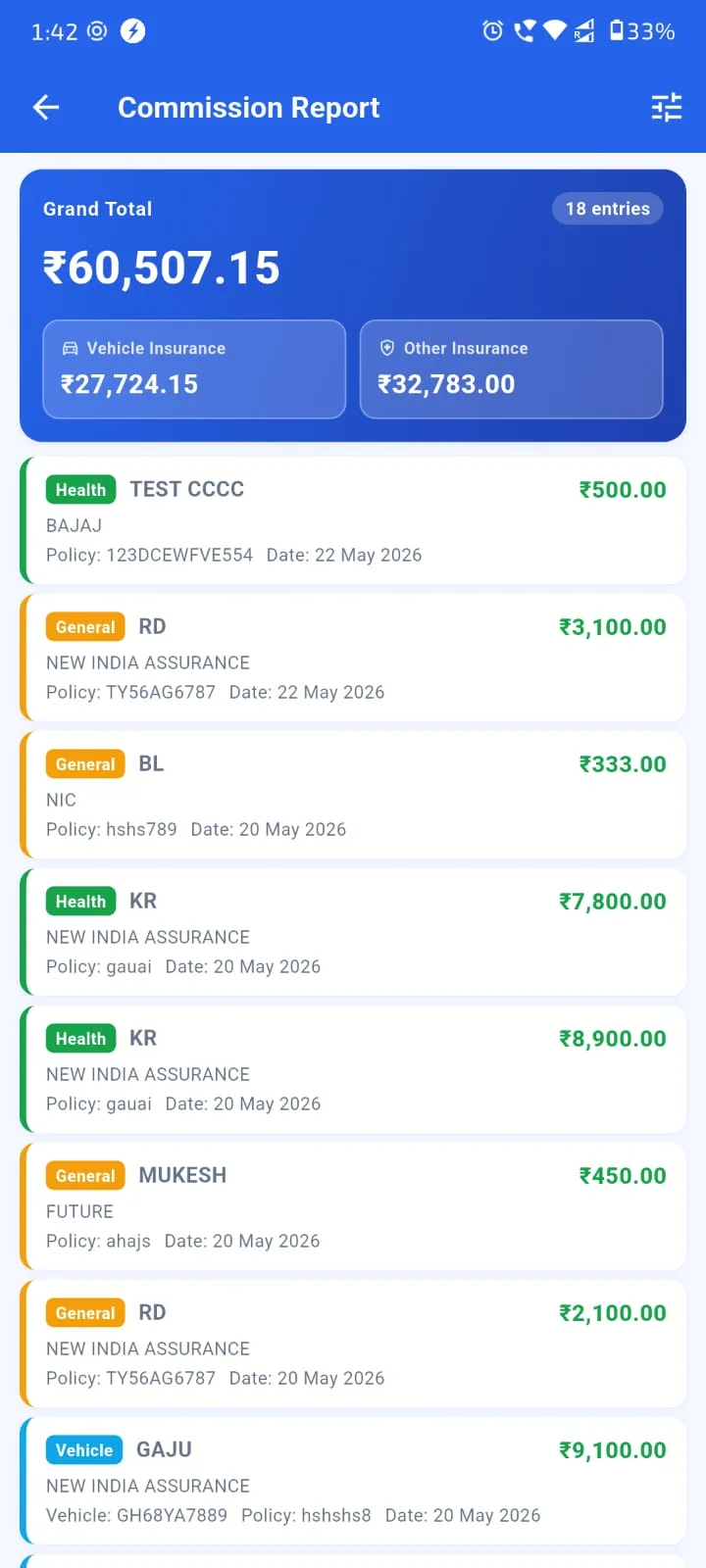
Most Indian insurance agents track commission in three places — a notebook, two Excel sheets and the back of their mind. By month-end, none of them agree. Automated commission tracking for agents ends that mess in one move.
The Excel Commission Problem
Manual commission tracking breaks for three reasons. First, slabs change — LIC tweaks first-year commission ratios, IRDSmart revises motor commission caps, health insurers run quarterly bonuses. Second, products multiply — an agent dealing in 4 insurers and 3 lines of business is juggling 30+ commission rules. Third, sub-agent splits get messy fast — 70/30, 60/40, special incentive on health, no commission on top-ups, all of it living in one agent's head.
The result: agents underpay sub-agents, overlook insurer bonuses, miss month-end reconciliation, and discover discrepancies only at year-end when the 26AS arrives.
How Agenex's Auto-Tracking Works
Agenex's automatic commission calculation ships with preconfigured slabs for the major Indian insurers. When you add or renew a policy:
- The system reads insurer + product + premium + tenure
- Applies the correct first-year or renewal commission slab
- Calculates TDS where applicable
- Splits with sub-agents if mapped
- Writes the line item to your monthly insurance premium report
Zero manual entry. Zero formulas. Zero "wait, was that 7.5% or 10% on this product?".
Multi-Insurer Slab Library
Agenex covers slabs for the major life insurers (including LIC and private), health insurers, motor insurers and general insurers. Each insurer has separate ladders for:
- First-year commission (FYC)
- Renewal commission, year 2 onwards
- Bonus / incentive thresholds
- Cluster or regional bonuses where applicable
- Mode loadings (annual, half-yearly, quarterly, monthly)
Custom insurers and bespoke slabs can be added in 30 seconds — useful if you work with regional or specialty insurers.
Stop Guessing. Start Tracking.
Agenex's commission engine is included in every plan from Rs.999/year. Free trial — no card needed.
Start Free TrialSub-Agent Commission Management
Bring sub-agents under your code in one screen. For each sub-agent:
- Set base commission share (e.g. 50% of FYC, 60% of renewal)
- Override per insurer or per product if needed
- Auto-calculate splits at every renewal
- Generate monthly statements per sub-agent
- Track payments made and outstanding amounts
The sub-agent management software module also includes a leaderboard so sub-agents see how they rank — gentle competition lifts everyone's performance.
TDS, 26AS Reconciliation
Insurance commission attracts 5% TDS once you cross the threshold. Agenex's accounting module:
- Tracks TDS deducted by every insurer per payment cycle
- Reconciles against your Form 26AS download
- Flags discrepancies for follow-up with insurer accounts
- Computes GST applicability for sub-broker / corporate-agent income
- Exports a year-end summary that your CA can use directly
Monthly Reports That Actually Help
The monthly insurance premium report bundles everything into a one-page PDF: total premium booked, commission earned, renewal vs new business mix, top 5 insurers, top 5 products, sub-agent performance and TDS deducted. Mail it to your CA, share it with your business partner, or just print it for your records.
The renewal ratio tracking tool sits alongside, showing month-over-month renewal performance — your single most important business metric.
FAQ
Yes — preconfigured slabs for major LIC products, leading health insurers, motor insurers, general and life. You can also add custom slabs for any insurer.
Yes. Onboard sub-agents under your code, set their slab and Agenex auto-splits the commission at every renewal with monthly statements.
Yes — TDS deduction tracking applicability for sub-broker income are baked in. The accounting module produces ready-to-file reports.
Yes — slice and dice by month, insurer, product type, sub-agent or client. Export everything to Excel or PDF.
Yes — first-year commission and renewal commission are tagged separately in every report so you understand recurring income vs new sales.